





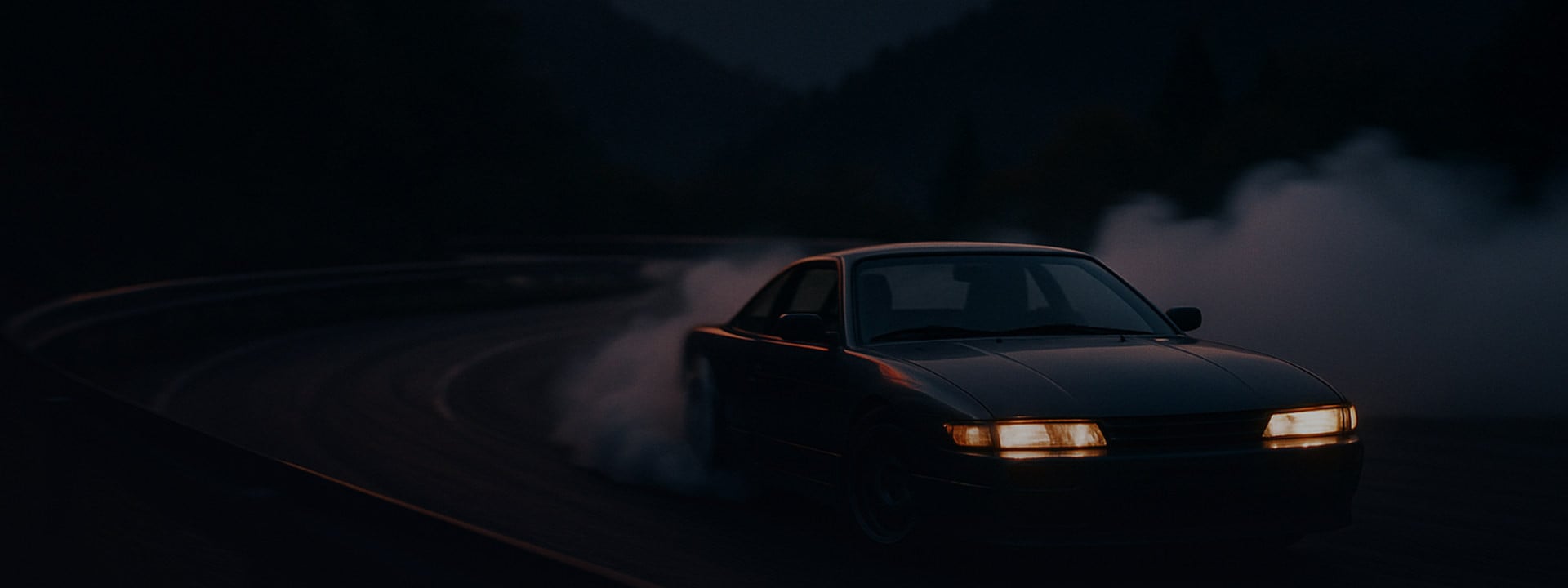
Forza Horizon 6 Drift & Touge Guide: Best Cars by Class, Tunes & Mountain Pass Strategy
Forza Horizon 6 took the festival to Japan, and the mountain passes are where the game gets serious. Touge battles and Drift Zones reward precision over horsepower, so the right car, the right tune, and a clean line decide whether you score a three-star slide or kiss the guardrail. Playground Games built FH6 around Japanese car culture, from the C1 expressway loop in Tokyo to the snowy passes of the Japanese Alps, and the Initial D influence runs deep through the touge routes. Playground Games detailed the full Japan setting in its official map reveal, and if you want the bigger picture our Forza Horizon 6 review covers how the whole package holds up.
This guide gives you the best drift and touge cars by class, the exact tune settings that make a car hold angle, all five touge battle routes, and how Drift Zone scoring actually works. Everything here reflects the live game as it plays after the May 19, 2026 launch.
🏔️ How Touge Battles Work in Forza Horizon 6
Touge battles are one-on-one duels on tight mountain passes, and they're new to the Horizon series. You face a single opponent on a narrow downhill or uphill route, and braking control matters far more than top speed. Limiting the field to one rival keeps the focus on driving instead of fighting through a pack.
The Two-Round Lead and Chase Format
Each touge battle runs two rounds. In round one you lead and your opponent chases, and the chaser wins the round by tailing your car inside a set distance to the finish. In round two the roles swap, so you have to hunt the opponent down and stay glued to their bumper. The combined gap across both rounds decides the winner, which means a strong lead run can bank a cushion before you defend.
Clean lines win these duels. Grip, braking stability, and corner-exit speed beat raw power on every route, so a well-tuned A-class car often outperforms a poorly driven hypercar.
Class Caps and Why They Matter
Every touge route locks you to a maximum Performance Index. A B 600 event accepts any car at B 600 or below, which means you can take a lower-class car and tune it up to the cap. This rewards smart building over expensive cars, and it's the reason class-specific car choice matters so much in FH6.
The class cap also explains why your car list should be built class by class. You need a strong B 600 build, a separate A 700 build, and so on, rather than one do-everything garage queen.
Touge Battles Versus Drift Zones
Touge battles and Drift Zones test different skills. Touge battles are timed grip-and-precision duels against a rival. Drift Zones are solo scoring runs where you hold a continuous slide for points. A great touge car often makes a poor Drift Zone car, because touge rewards grip and Drift Zones reward controlled oversteer. Build for the mode you want to clear.
🚗 Best Drift & Touge Cars by Class

The strongest FH6 garage keeps one tuned car per class, because every touge route enforces a Performance Index cap. Here are the best choices for B, A, S1, and S2, plus a dedicated list for Drift Zone scoring. If you want to see the full lineup in one place, browse our Forza Horizon 6 boosts catalog.
Class (PI Cap) | Best Car | Strong Alternatives | Home Touge Route |
B (B 600) | Toyota Sprinter Trueno AE86 | Mazda RX-7, Nissan Skyline GT-R | Hakone Nanamagari, Mt. Haruna |
A (A 700) | Nissan Silvia S15 | Toyota GR Supra, Lexus LFA, Honda Civic Type R, BMW M2 Forza Edition | Bandai Azuma |
S1 (S1 800) | Porsche 911 Turbo S (2023) | Nissan GT-R NISMO (AWD traction), Lamborghini Huracan STO, Porsche 911 GT3 RS | Norikura Skyline |
S2 (S2 900) | Ferrari LaFerrari | Porsche 918 Spyder, Koenigsegg Jesko | Arashiyama Takao |
Best B-Class Touge Car (B 600)
The Toyota Sprinter Trueno AE86 is the default B-class pick, and Playground Games clearly built FH6 with a nod to its Initial D heritage on the mountain. The AE86 is light, balanced, and forgiving on the tight B 600 routes like Hakone Nanamagari and Mt. Haruna. For more straight-line pace at the same cap, the Mazda RX-7 and the Nissan Skyline GT-R both tune down to B 600 cleanly and carry strong corner-exit drive.
Best A-Class Touge Car (A 700)
The Nissan Silvia S15 is the best single investment for mid-tier touge. It balances grip, weight, and throttle response, and it handles the A 700 cap at Bandai Azuma without drama. The Toyota GR Supra, the Lexus LFA, the Honda Civic Type R, and the BMW M2 Forza Edition round out the A-class field, and each suits a slightly different driving style. Pick the Silvia S15 if you want one car that does everything well. Across our launch-week runs at Bandai Azuma, the Silvia S15 held the A 700 cap with the most predictable rotation of any car we tested.
Best S1-Class Touge Car (S1 800)
S1 800 is where speed and braking have to coexist. The Nissan GT-R NISMO delivers all-wheel-drive traction that makes the S1 routes like Norikura Skyline more forgiving under power. The 2023 Porsche 911 Turbo S is the strongest all-round S1 choice, pairing brutal acceleration with the braking stability touge demands. The Lamborghini Huracan STO and the Porsche 911 GT3 RS reward drivers who trust the front end into fast bends.
Best S2-Class Touge Car (S2 900)
Arashiyama Takao runs at the S2 900 cap, and this is hypercar territory. The Ferrari LaFerrari, the Porsche 918 Spyder, and the Koenigsegg Jesko all have the power and aero to set top times here. S2 touge is unforgiving, so braking discipline matters even more than it does in S1. Treat the throttle like a dimmer switch, not an on-off button.
Best Cars for Drift Zones
Drift Zones reward a different build. You want a front-engine, rear-wheel-drive layout that breaks traction predictably and holds a long slide. The Nissan Silvia S15 and the AE86 carry over well from touge duty. For dedicated Drift Zone scoring, the Formula Drift #151 Toyota GR Supra, the Nissan Silvia K's, the Toyota Chaser GT, and the 1992 Mazda RX-7 Type R are community favorites. Any Mazda MX-5 Miata also drifts beautifully on a budget thanks to its light, balanced chassis.
Stock vs Tuned Drift Performance
A drift tune transforms a stock car. The table below shows representative results for a Nissan Silvia S15 before and after a proper drift build. Exact in-game scores vary by route and driver, so treat these as directional.
Metric | Stock S15 | Drift-Tuned S15 |
Tire compound | Sport / stock | Drift compound |
Differential | Standard | Locked on acceleration |
Drift Zone star rating | 1 star (typical) | 3 stars (typical) |
Angle hold | Snappy, spins easily | Stable, predictable |
Slide chaining | Breaks between corners | Links corner to corner |
Typical Drift Zone score | Low | 2x to 4x higher |
Rear-wheel drive is mandatory for Drift Zone scoring, so convert all-wheel-drive cars to RWD before you build a drift setup.
Build the Drift Garage Without the Grind 🚗
Every S-class touge weapon on this list costs credits and tuning hours. ArmadaBoost's FH6 boosting service stacks your account with the credits to build them in minutes instead of weeks.
🔧 Drift Tuning Fundamentals
A drift tune prioritizes predictable weight transfer over raw power. Dial in these settings and most rear-wheel-drive cars will hold a clean, controllable slide. Apply each step in the Upgrades and Tuning menu.
Setting | Recommended Value | Note |
Front tire pressure | 29-30 PSI | Stable, responsive steering |
Rear tire pressure | 35-40 PSI | Breaks the rear loose; raise if it won't slide, lower if it spins |
Springs & dampers | Rear softer than front | Rear squats and unloads for long slides |
Anti-roll bars | Rear soft, front firm | Frees the rear, keeps front turn-in sharp |
Differential (acceleration) | 90-100% lock | Biggest factor; keeps the rear predictable on throttle |
Differential (deceleration) | 0-20% lock | Light off-throttle lock |
Front camber | -3.5 to -5.0 deg | Keeps the tire planted at extreme steering angles |
Rear camber | -1.5 to -2.0 deg | Milder for rear grip |
Front toe | +1.0 deg out | Sharper initiation |
Rear toe | -2.0 deg out | Stability mid-slide |
Caster | +7.0 deg | Stronger self-centering steering |
Gearing | Shorter for tight touge, taller for fast Drift Zones | Adjust final drive so it holds the slide off the limiter |
Tire Pressure
Set front tire pressure around 29 to 30 PSI for stable, responsive steering. Set rear pressure higher, in the 35 to 40 PSI range, to reduce the rear contact patch and make the back end break loose. If the car refuses to slide, raise rear pressure further. If it snaps and spins, back the rear pressure off a couple of PSI. A common mistake we see from new drifters is maxing rear pressure, which shrinks the contact patch so far that the car loses grip entirely.
Suspension and Anti-Roll Bars
Soften the rear springs and dampers so the rear squats and unloads, which makes long slides easier to ride out. Keep the front slightly stiffer so the nose turns in sharply. Apply the same logic to the anti-roll bars: soften the rear bar to free up the rear, and keep the front bar firmer for response.
Differential Setup
The differential is the single biggest factor in a consistent slide. Lock the differential on acceleration so both rear wheels spin together, which keeps the rear predictable when you feed in throttle. Use a drift or race differential, and many drift differentials set this acceleration lock high by default. In our launch-week testing, raising the acceleration lock toward 100 percent was the single change that turned random spin-outs into repeatable three-star runs.
Alignment: Camber, Toe, and Caster
Run aggressive front camber between negative 3.5 and negative 5.0 degrees to keep the tire planted at extreme steering angles. Set rear camber milder, around negative 1.5 to negative 2.0 degrees. Add front toe-out near positive 1.0 degree for sharper initiation, and rear toe-out near negative 2.0 degrees for stability mid-slide. Max out caster around positive 7.0 degrees for stronger self-centering steering.
Gearing
Tune the gears so your usable power band sits where you drift. Shorter gearing keeps the rear lit on tight, slow touge corners. Slightly taller gearing helps on faster, sweeping Drift Zones where you carry more speed. Adjust the final drive until the car holds its slide without bouncing off the rev limiter.
A Complete Drift Build You Can Copy (Nissan Silvia S15)
Here is the full Drift Zone build we run on the Nissan Silvia S15 for three-star scores. Replicate it setting by setting, then fine-tune to your controller.
- Drivetrain: rear-wheel drive (convert from AWD if needed)
- Tires: drift compound, front 29 PSI, rear 38 PSI
- Differential: acceleration 90 to 100 percent, deceleration 0 to 20 percent
- Front camber: negative 4.0 degrees. Rear camber: negative 1.5 degrees
- Toe: front 1.0 degree out, rear 2.0 degrees out. Caster: 7.0 degrees
- Anti-roll bars: front firm, rear soft. Springs and dampers: rear softer than front
- Power and weight: keep enough power to spin the rear, and keep weight low for balance
Dial these in, then adjust rear tire pressure first if the car won't slide or spins too easily.
Tune Share Codes: How to Get Verified Setups
You don't have to build every tune by hand. FH6 lets you download community tunes directly in-game, so you can run a proven drift setup in minutes. To apply a share code, press Backspace on PC or the View button on Xbox, then enter the nine-digit code in the tune menu. You can also pull shared tunes and liveries straight from the car meets at Daikoku PA, where players post setups for the cars on display. Because share codes rotate and creators update them after each patch, grab the current top-rated drift tune for your specific car rather than an old code, and check the in-game rating before you commit.
Building and tuning a different car for every class cap eats credits fast. ArmadaBoost Forza Horizon 6 Super Wheelspins drop the credits and rare drift cars you need to kit out an S15 or AE86 in one session, so you can skip the grind and get straight to the touge.
🛠️ How to Drift in Forza Horizon 6
Car and tune get you halfway. Technique gets you the rest. FH6 supports four main ways to start and hold a drift, and most drivers mix them depending on corner speed.
- Handbrake: the easiest initiation. Pull it (A on controller, Spacebar on keyboard) to lock the rear and swing the back end out. This is technically an e-drift, but it's reliable while you learn.
- Weight transfer: smoother and scores better. Approach the corner at speed, tap the footbrake while steering hard into the turn to shift weight forward, then feed throttle as the rear steps out. Add a quick handbrake tap to extend the slide if it starts to straighten.
- Clutch kick: the pro tool for low-power cars on slow corners, and it needs Manual with Clutch enabled. Hold the clutch, blip the throttle to spike the revs, then dump the clutch to fire power to the rear wheels. This snaps the car sideways on demand.
- Flick: best on fast corners where a handbrake would scrub too much speed. You flick the car the opposite way first, then transfer weight into the corner. Flicks take practice, but they keep your speed up where it counts.
📍 All Mountain Pass and Touge Locations

FH6 maps its touge routes onto real Japanese driving roads. Mt. Haruna is the headline name for any drift fan, because it's the real mountain that inspired Akina in Initial D. Here are all five touge battle routes and the class each one runs at. For exact route locations and the landmarks around them, our Japan map guide maps out every region.
Route | Class Cap | Notes |
Hakone Nanamagari | B 600 | Tight, technical, and a strong first touge to learn the format. |
Mt. Haruna | B 600 | The Initial D mountain, full of the downhill hairpins the series made famous. |
Bandai Azuma | A 700 | Faster and more flowing, rewarding mid-corner commitment. |
Norikura Skyline | S1 800 | High-altitude sweepers where braking stability is everything. |
Arashiyama Takao | S2 900 | The hypercar gauntlet, where one missed brake marker ends your run. |
Match your build to the cap. A B 600 AE86 wins at Hakone Nanamagari and Mt. Haruna, while a tuned Silvia S15 owns Bandai Azuma at A 700.
Spend Your Time Sliding, Not Farming ⛰️
Hit every mountain pass with the right machine. ArmadaBoost's FH6 credits service covers the credits and unlocks so you can focus on the touge, not the grind to get there.
🎯 Drift Zone Strategy and Scoring
FH6 has 20 Drift Zones spread across Japan, from the sweeping bends of Hakone and the Bandai Azuma Skyline to the industrial streets of Tokyo. Each zone scores you on three variables: angle, speed, and duration. The score multiplier climbs the longer you hold one continuous slide, so a single long drift is worth far more than a string of short twitches.
Chaining is the key to big scores. The scoring area extends well past the visible flags, so keep drifting beyond the last marker for extra distance. A near-miss skill or a speed skill started just before the zone feeds straight into your multiplier once the slide begins. Hold one connected drift through the whole zone, keep the angle high without spinning, and the points stack fast. When we tested the Inner City Run, one unbroken slide through the final corners cleared the 45,000-point three-star target in a single pass, while choppy, broken drifts on the same run fell well short.
Each zone rates your run from one to three stars. Required points climb steeply across the map, from around 45,000 at the accessible Inner City Run to roughly 340,000 at Hakone Nanamagari, the hardest zone in the game. Build a dedicated drift car for the high-threshold zones, because a grip-focused touge tune won't get you there.
🅿️ Car Meet Drifting at Daikoku PA
Daikoku Parking Area is the social heart of FH6 drift culture. The real Daikoku PA is an iconic Tokyo meetup, and Playground Games rebuilt it as a primary multiplayer hub inside the shared open world, with no loading screens and no matchmaking lobbies. You drive in and the other cars are real players.
Car meets at Daikoku are where the community lives. You can show off your build, download tunes and liveries other players have shared, and buy a stock version of any car you see from the Autoshow. A nightly meet draws crowds, so it's the fastest place to grab a fresh drift tune and find people to run touge with. If you want to learn drift technique quickly, watch what the top builds at Daikoku are running and copy their tune settings.
💰 Building the Ultimate Drift Car Without the Grind
Here is the honest part. A full drift garage costs millions of credits. Drift compound tires, engine swaps, drivetrain conversions, and the wide-body kits that make a Silvia or AE86 look right all add up fast, and that's before you buy a car for each class cap. The grind for credits is real, and it pulls hours away from the part you actually enjoy, which is driving the passes.
The fastest legit way to bankroll a drift garage is wheelspins. ArmadaBoost Forza Horizon 6 Super Wheelspins rain credits, rare cars, and wheelspin-exclusive drift machines into your garage in a single session, so you can kit out an AE86 or a Silvia S15 without farming for parts. Prefer a fixed amount to spend? Grab the exact Forza Horizon 6 credits you need and build straight away. Want a ready-made garage from day one? A modded FH6 account hands you the credits and cars already unlocked. Every option is fast, safe, and backed by a 4.9-star Trustpilot rating across more than 4,500 verified reviews. Skip the grind, keep the glory.
FH6 Drift & Credits Service 🚀
Want a meta drift build without farming parts and credits for hours? ArmadaBoost's FH6 boosting service can set you up with the credits and cars to own Daikoku touge and the drift zones. Fast delivery, rated 4.9 stars on Trustpilot across 4,500+ reviews.
ℹ️ FAQ: Drifting and Touge in Forza Horizon 6
How do touge battles work in FH6?
Touge battles are one-on-one duels on mountain passes, run over two rounds. You lead in round one and chase in round two, and the chaser scores by tailing the leader inside a set distance. The combined gap across both rounds decides the winner, and each route locks you to a class cap from B 600 to S2 900.
What is the best drift car in FH6?
The Nissan Silvia S15 is the best all-round drift and touge car, with strong balance and throttle control. For budget B-class touge, the Toyota AE86 is the classic pick. For pure Drift Zone scoring, the Formula Drift #151 Toyota GR Supra and the AE86 are top choices.
What is the best B-class touge car in FH6?
The Toyota AE86 is the best B 600 touge car for most players, thanks to its light, balanced chassis and Initial D pedigree. The Mazda RX-7 and Nissan Skyline GT-R are strong alternatives at the same cap.
Where are the mountain passes in FH6?
The five touge battle routes are Hakone Nanamagari, Mt. Haruna, Bandai Azuma, Norikura Skyline, and Arashiyama Takao. Mt. Haruna is the real mountain that inspired Akina in Initial D. Drift Zones are spread across all 20 locations in Japan.
How do you drift in Forza Horizon 6?
Use a front-engine, rear-wheel-drive car with a drift tune. Start the slide with the handbrake, a footbrake weight transfer, or a clutch kick, then balance the throttle to hold your angle. Lock the differential on acceleration and run drift compound tires for the most predictable slide.
Is the AE86 in Forza Horizon 6?
Yes. The Toyota Sprinter Trueno AE86 is in FH6 and is one of the best B-class touge cars, a clear nod to its Initial D fame on Mt. Haruna.



 Success

 Data
updated
Data
updated